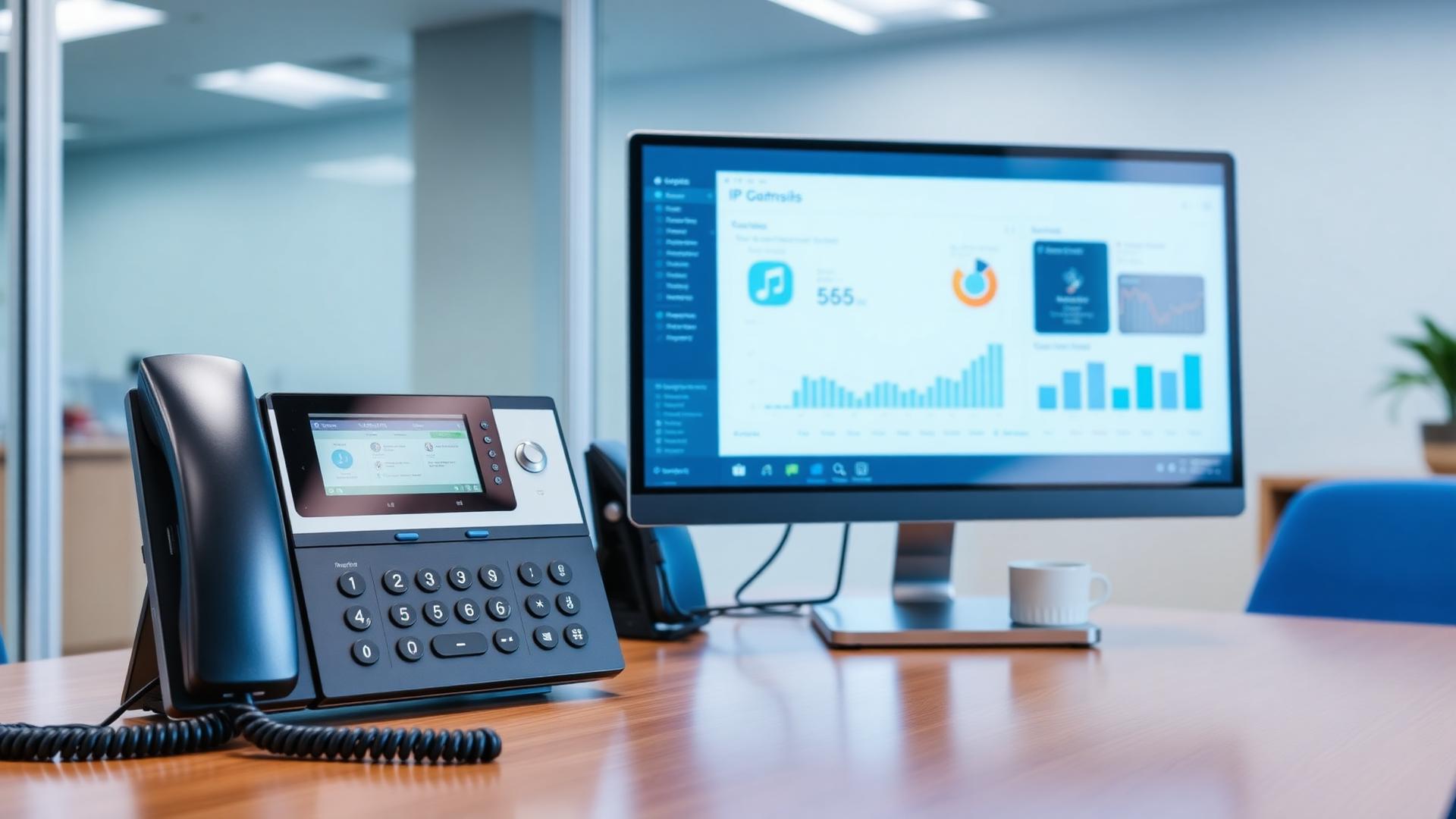
VoIP (Voice over Internet Protocol) allows businesses to make and receive phone calls using the internet instead of traditional telephone lines. Modern VoIP systems convert voice into digital data packets and transmit them over secure internet connections. For many South African businesses, VoIP has replaced traditional PBX phone systems because it provides lower call costs, greater flexibility, remote work support, and advanced communication features such as call routing, voicemail-to-email, and call centre integration.
Credibility & Methodology
Reviewed by: SureTel Network Engineering Team
Experience: 15+ years deploying VoIP systems for South African businesses
Last Updated: March 2026
SureTel provides VoIP, Cloud PBX, connectivity, and call centre infrastructure for organisations that depend on reliable communication systems. This guide reflects real-world deployment experience with South African business networks.
Table of Contents
- What is VoIP?
- How VoIP works
- VoIP vs traditional phone systems
- Key benefits for businesses
- Internet requirements for VoIP
- Common VoIP problems
- How to choose a VoIP provider
- VoIP costs in South Africa
- FAQ
What is VoIP?
VoIP stands for Voice over Internet Protocol.
Instead of sending voice signals through copper phone lines, VoIP converts voice into digital packets that travel across the internet.
These packets are then reconstructed into audio at the destination.
This allows businesses to use:
- Desk phones
- Computer softphones
- Mobile apps
- Call centre platforms
All connected to the same communication system.
How VoIP Works
VoIP systems rely on several core technologies.
SIP (Session Initiation Protocol)
SIP is used to establish and manage calls between devices.
RTP (Real-Time Transport Protocol)
RTP carries the actual voice packets during calls.
Codecs
Codecs compress voice to reduce bandwidth usage.
A commonly used codec for business VoIP is G.729, which typically uses about:
32 kbps upload and 32 kbps download per call.
Our article How Much Internet Speed Do You Need for VoIP explains bandwidth planning in more detail.
VoIP vs Traditional Phone Systems
Businesses often compare VoIP with traditional PBX phone systems.
| Feature | VoIP | Traditional PBX |
|---|---|---|
| Installation | Fast | Complex |
| Scalability | Easy to add extensions | Limited |
| Remote Work | Supported | Difficult |
| Maintenance | Managed in cloud | Requires hardware |
| Cost | Lower operational cost | Higher infrastructure cost |
For most businesses today, VoIP provides a more flexible and scalable solution.
Key Benefits of VoIP for Businesses
Lower Communication Costs
VoIP significantly reduces call costs, especially for long-distance and international calls.
Businesses can also choose minute bundles or pay-per-minute call rates.
Our VoIP pricing guide explains pricing structures in South Africa.
Scalability
Businesses can easily:
- Add extensions
- Support remote workers
- Expand call centre teams
- Integrate new features
This makes VoIP ideal for growing organisations.
Advanced Communication Features
VoIP systems offer powerful features such as:
- Auto attendants
- Call queues
- IVR menus
- Call recording
- Reporting dashboards
- CRM integrations
These capabilities help businesses improve customer service and internal communication.
Remote Work Support
Employees can use:
- Mobile VoIP apps
- Softphones
- Desk phones connected via VPN
This allows teams to work from anywhere while remaining connected to the company phone system.
Internet Requirements for VoIP
VoIP requires reliable internet connectivity.
Although bandwidth requirements are relatively low, network stability is critical.
Bandwidth Requirements (G.729)
| Concurrent Calls | Upload Required | Download Required |
|---|---|---|
| 5 calls | 160 kbps | 160 kbps |
| 10 calls | 320 kbps | 320 kbps |
| 20 calls | 640 kbps | 640 kbps |
| 50 calls | 1.6 Mbps | 1.6 Mbps |
Businesses should ideally run VoIP systems over reliable connections such as:
- Business fibre
- Licensed wireless
- Microwave connectivity
Learn more about business connectivity options.
Common VoIP Problems (And How to Avoid Them)
Some businesses experience VoIP issues when systems are poorly deployed.
Common issues include:
- Poor call quality
- Network congestion
- Dropped calls
- Weak internet connections
Our guide Top 10 VoIP Problems Businesses Experience explains how businesses can prevent these problems.
How to Choose a VoIP Provider in South Africa
Choosing the right VoIP provider is critical.
Businesses should evaluate several factors.
Reliability
Ensure the provider operates reliable infrastructure and stable networks.
Technical Support
Businesses should have access to experienced engineers rather than only call centre support.
Integrated Services
Working with providers that offer connectivity, VoIP, and infrastructure simplifies troubleshooting.
Monitoring
Advanced monitoring helps detect call quality issues before they affect users.
Our article Best VoIP Providers in South Africa explains how to evaluate providers.
VoIP for Call Centres
VoIP systems are also widely used in call centres.
When combined with call centre platforms such as VICIdial, VoIP can support:
- Predictive dialling
- Inbound support queues
- Campaign management
- Real-time reporting
Businesses running large call centres must ensure proper network design.
Our guide VoIP for Call Centres in South Africa explains these requirements in detail.
Common VoIP Deployment Mistakes
Businesses can avoid problems by avoiding these common mistakes.
Using Residential Internet
Business VoIP should run on reliable business-grade connectivity.
Running Phones on WiFi
Wired Ethernet connections provide more stable performance.
No QoS Configuration
Quality of Service prioritises voice traffic on the network.
Poor Router Configuration
Professional network infrastructure ensures stable performance.
SureTel VoIP Solutions
SureTel provides reliable VoIP systems designed for South African businesses.
Our solutions include:
Because SureTel also provides connectivity and network infrastructure, we can design complete communication environments that deliver reliable performance.
Learn more about our VoIP services.
Or explore our Business VoIP solutions for South African businesses.
Final Thoughts
VoIP technology has transformed business communication by replacing traditional phone systems with flexible, internet-based platforms.
By combining reliable connectivity, properly configured networks, and modern communication systems, businesses can deploy VoIP environments that support productivity, customer service, and growth.
For South African businesses looking to modernise their communication infrastructure, VoIP provides a powerful and cost-effective solution.