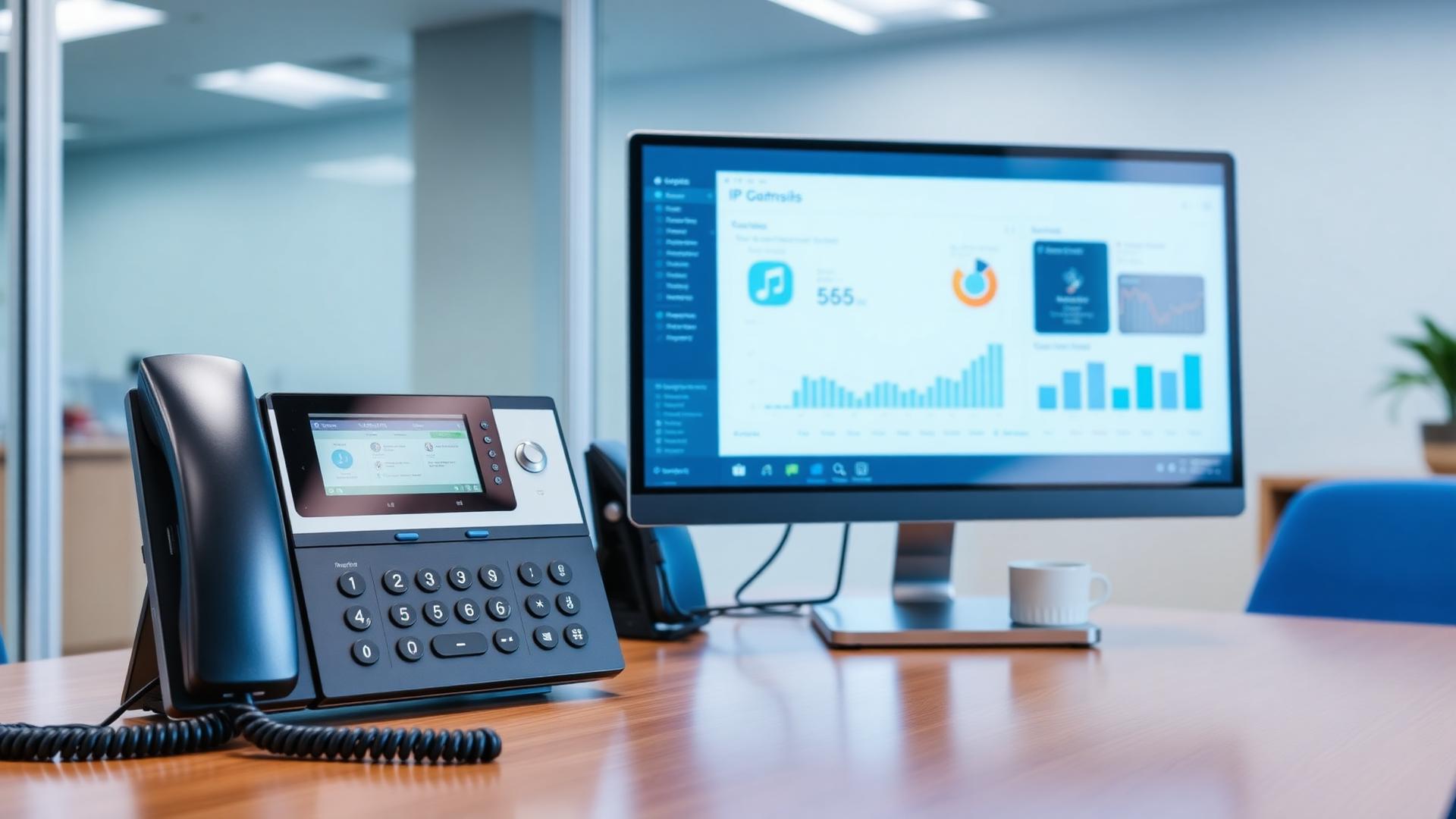
SIP Trunking Explained: Scaling Your Voice Capacity Without Hardware
SIP trunking replaces traditional ISDN and analog phone lines with an internet-based connection between your PBX and the public telephone network. It uses voice over IP technology to route calls over your existing internet connection — eliminating physical line rentals, reducing call costs by 40–60%, and allowing you to add or remove call channels instantly without any hardware changes. If you already have a PBX, SIP trunking is the fastest path to lower costs and greater flexibility. Talk to SIP trunking providers to get started.
This guide was prepared by the SureTel Network Engineering Team, which has provisioned thousands of SIP trunk connections for South African businesses — from 2-channel SME deployments to 200+ channel call centre installations.
Last Updated: March 2026
What Is SIP Trunking?
SIP stands for Session Initiation Protocol — the standard internet protocol used to set up, manage, and tear down voice calls over IP networks. A SIP "trunk" is the virtual equivalent of a traditional phone line. Instead of a physical copper cable running from Telkom's exchange to your office, a SIP trunk uses your internet connection to carry voice calls between your PBX and the public telephone network (PSTN).
In practical terms, SIP trunking lets your business make and receive phone calls using your existing broadband or fibre connection — without renting physical phone lines. Every call is converted to digital data packets and transmitted using voice over IP technology, the same foundation that powers modern business communication worldwide.
For businesses that already have a PBX (Private Branch Exchange) — whether it's an on-premise IP-PBX, a legacy digital system, or a cloud-hosted platform — SIP trunking is the bridge that connects it to the outside world without traditional telco infrastructure.
How SIP Trunking Works
Understanding how SIP trunking works doesn't require deep technical knowledge. Here's the simplified flow:
- Your PBX handles internal call routing, extensions, voicemail, and call features as it always has
- The SIP trunk connection links your PBX to your SIP provider's network over the internet
- The SIP provider routes outbound calls to the PSTN (landlines, mobiles, international numbers) and delivers inbound calls to your PBX
- Your existing phone numbers are ported to the SIP provider, so callers dial the same numbers as before
The key difference from traditional lines: everything travels over your internet connection. There's no separate physical infrastructure for voice — which is exactly why SIP trunking is cheaper, faster to provision, and infinitely more scalable.
The Role of Codecs
SIP trunking uses audio codecs to compress voice into data packets. The two most common codecs are:
- G.711: Uncompressed, toll-quality audio using ~87 Kbps per call. Best for fibre connections with ample bandwidth
- G.729: Compressed audio using ~32 Kbps per call. Ideal for bandwidth-constrained environments while maintaining good quality
Your SIP provider and PBX negotiate the codec automatically. For most South African business fibre connections, G.711 provides the best quality. For more detail on how codecs affect call quality, see our in-depth SIP trunking guide.
SIP Trunking vs. ISDN Lines
Many South African businesses still run on ISDN (Integrated Services Digital Network) lines provisioned by Telkom. Here's how SIP trunking compares:
| Feature | ISDN Lines | SIP Trunking |
|---|---|---|
| Connection Type | Physical copper lines from exchange | Virtual connection over internet |
| Channels per Line | Fixed (2 for BRI, 23/30 for PRI) | Flexible — add channels on demand |
| Monthly Line Rental | R500–R2,000+ per line | R0 — included in SIP service |
| Call Rates | Higher (especially long-distance) | 40–60% lower |
| Provisioning Time | 2–6 weeks (Telkom scheduling) | Minutes to hours |
| Scalability | Order new lines, wait for installation | Add channels instantly via portal |
| Number Portability | Complex, slow process | Standard — keep your numbers |
| Failover | None (line down = calls down) | Automatic rerouting to mobile/backup |
| Future Viability | ISDN sunset in progress globally | Industry standard going forward |
The global ISDN sunset is well underway. Major carriers worldwide are decommissioning ISDN infrastructure, and South African businesses still relying on it face rising costs and declining support. SIP trunking isn't just cheaper — it's the only future-proof option.
The Real Cost Savings
Cost reduction is the #1 reason businesses switch to SIP trunking. Here's where the savings come from:
Eliminated Line Rentals
ISDN PRI lines cost R1,500–R2,500 per month for 23–30 channels. A business running 3 PRI lines pays R4,500–R7,500 monthly just for line rental — before making a single call. SIP trunking eliminates this entirely.
Lower Call Rates
Voice over IP calls route over the internet, bypassing traditional telco toll charges. Local calls are typically 50–70% cheaper, national calls 40–60% cheaper, and international calls can be 70–90% cheaper depending on the destination.
No Hardware Investment
Because SIP trunking works with your existing PBX, there's no capital expenditure on new equipment. The "trunk" is a software configuration, not a physical connection.
Example: 60-Extension Office
| Cost Component | ISDN (3x PRI) | SIP Trunking |
|---|---|---|
| Line Rental | R6,000/month | R0 |
| 30 Concurrent Channels | Included in PRI | R1,500/month |
| Average Call Charges | R8,000/month | R3,500/month |
| Maintenance | R500/month | R0 |
| Total Monthly | R14,500 | R5,000 |
| Annual Saving | — | R114,000 |
That's over R100,000 per year saved — without changing a single phone on a single desk.
Scaling Voice Capacity Without Hardware
This is where SIP trunking truly shines compared to traditional infrastructure:
Traditional Scaling (ISDN)
Need more call capacity? Order another PRI line from Telkom. Wait 2–6 weeks for installation. Pay for a fixed block of 23 or 30 channels — whether you use them all or not. If demand drops after a seasonal peak, you're still paying for unused capacity.
SIP Trunk Scaling
Need more call capacity? Log into your SIP provider's portal and add channels. They're active within minutes. Scale from 10 concurrent calls to 50 overnight. Scale back down after your busy season. Pay only for what you use.
This elasticity is transformative for businesses with fluctuating call volumes — recruitment agencies during hiring seasons, retail businesses during holidays, or any company running marketing campaigns that drive inbound call spikes.
No Physical Limits
ISDN lines have a physical ceiling: the number of copper pairs running to your building. SIP trunking's only limit is your internet bandwidth. A 100 Mbps symmetrical fibre connection can support over 1,000 concurrent G.729 calls — more capacity than most businesses will ever need.
Keep Your Existing PBX
One of the biggest misconceptions about modern voice over IP technology is that you need to replace your entire phone system. With SIP trunking, that's simply not true.
If your business has invested in a PBX — whether it's an Asterisk-based system, a Yealink IP-PBX, a Grandstream UCM, or even a legacy Siemens or Panasonic digital PBX with a SIP gateway — SIP trunking connects it to the outside world without touching your internal infrastructure.
Your extensions, call routing rules, voicemail boxes, ring groups, and IVR menus all remain exactly as they are. The only change is how calls enter and leave your building: instead of ISDN lines, they travel over your internet connection via SIP.
For businesses considering a full system upgrade in the future, SIP trunking is an excellent interim step. You get immediate cost savings while planning a migration to a cloud PBX platform at your own pace. For a detailed comparison of these approaches, see our VoIP vs Cloud PBX vs SIP Trunking guide.
Bandwidth & Network Requirements
Since SIP trunk calls share your internet connection, bandwidth planning is critical:
| Concurrent Calls | G.711 Bandwidth | G.729 Bandwidth | Recommended Connection |
|---|---|---|---|
| 5 | 435 Kbps | 160 Kbps | 10 Mbps Fibre |
| 10 | 870 Kbps | 320 Kbps | 20 Mbps Fibre |
| 30 | 2.6 Mbps | 960 Kbps | 50 Mbps Fibre |
| 60 | 5.2 Mbps | 1.9 Mbps | 100 Mbps Fibre |
| 100+ | 8.7 Mbps | 3.2 Mbps | Dedicated Fibre with QoS |
The bandwidth numbers look small — because they are. Voice is lightweight data. The real requirement is quality, not quantity: low latency (<50ms), minimal jitter (<30ms), and zero packet loss. A properly configured business internet connection with QoS (Quality of Service) policies that prioritise voice traffic ensures crystal-clear calls even during heavy data usage.
Dedicated vs. Shared Bandwidth
For businesses with 10+ concurrent SIP channels, we recommend either a dedicated voice VLAN on your existing fibre or a separate internet connection exclusively for voice. This ensures that a large file download or cloud backup never degrades call quality.
Choosing the Right SIP Provider
Not all SIP providers deliver the same quality. When evaluating options for your business, consider these factors:
- Local peering: Does the provider peer directly with South African carriers (MTN, Vodacom, Telkom)? Direct peering means lower latency and better call quality for local calls
- Number portability: Can they port your existing landline numbers? This should be a standard service, not an expensive add-on
- Codec support: Look for G.711 and G.729 support as a minimum. Opus codec support is a bonus for high-quality internal calls
- Uptime SLA: Business-grade SIP providers should guarantee 99.9%+ uptime with financial penalties for breaches
- Failover options: What happens when your internet goes down? The best providers offer automatic failover to mobile numbers or a backup trunk
- Transparent pricing: Per-channel pricing should be clear. Watch for hidden costs: number porting fees, setup charges, minimum commitments, or per-minute surcharges on certain call types
- 24/7 support: Voice is mission-critical. Your SIP provider should offer round-the-clock technical support, not just business-hours assistance
SureTel ticks every box. As one of South Africa's established SIP trunking providers, we offer direct carrier peering, free number porting, automatic failover, and 24/7 engineering support.
Failover & Business Continuity
The most common objection to SIP trunking is: "What if the internet goes down?" It's a valid concern — and one that professional deployments address comprehensively:
- Automatic call forwarding: If the primary SIP trunk becomes unreachable, calls automatically reroute to predefined mobile numbers or an alternative office
- Dual-WAN failover: A secondary internet connection (LTE, microwave, or a second fibre link) activates automatically if the primary fails
- Geographic redundancy: Multi-site businesses can route calls between offices — if Johannesburg goes offline, Cape Town handles the calls
- SIP provider redundancy: Advanced deployments use two SIP providers simultaneously, with automatic failover between them
With proper planning, a SIP-based voice infrastructure is actually more resilient than ISDN. An ISDN line has a single point of failure (the physical cable). A well-designed SIP deployment has multiple failover paths.
Common SIP Trunking Myths
"SIP trunking means bad call quality"
False. On a properly provisioned internet connection with QoS, SIP calls are indistinguishable from traditional landline calls. Poor quality only occurs when voice over IP traffic competes with unmanaged data traffic on congested connections.
"I need to replace my phone system"
False. SIP trunking works with your existing PBX. Your phones, extensions, and internal routing don't change. Only the external connection method changes.
"It's complicated to set up"
Not with a professional provider. SureTel handles the entire configuration: PBX trunk settings, codec negotiation, number porting, failover rules, and QoS policies. Most businesses are live within 48 hours of signing up.
"SIP is only for big companies"
False. SIP trunking is actually more beneficial for SMEs because the percentage savings are higher. A 5-extension business replacing 2 ISDN BRI lines with a SIP trunk can save R1,000–R2,000 per month — significant for a small operation.
SureTel SIP Trunking Solutions
SureTel provides fully managed SIP trunking for South African businesses of all sizes. Our SIP trunk service includes:
- Unlimited concurrent channels scaled to your actual needs — no fixed blocks
- Free number porting from any existing provider
- Direct peering with MTN, Vodacom, and Telkom for optimal local call quality
- Automatic failover to mobile or secondary trunks
- QoS configuration on your network to prioritise voice traffic
- 24/7 technical support with direct access to network engineers
- Integration with any SIP-compatible PBX — on-premise or cloud
Whether you're replacing aging ISDN lines, scaling a growing call centre, or adding voice to a new office, SureTel's SIP trunking providers team designs a solution that fits your exact requirements.
Ready to cut your phone line costs by 40–60%? Request a free SIP trunk assessment and find out how many channels your business needs — and how much you'll save.