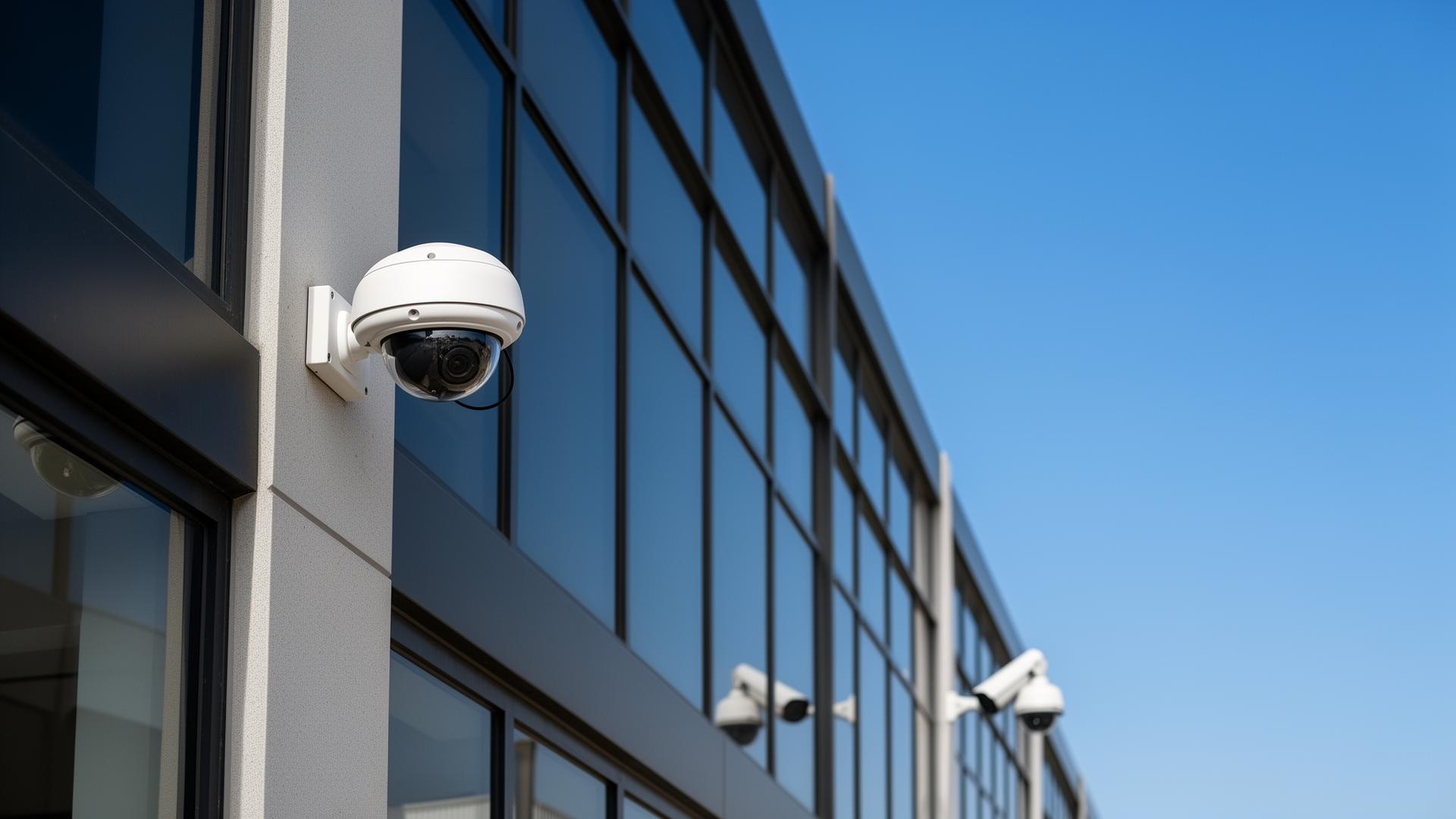
Security is one of the most important priorities for modern businesses. Theft, vandalism, employee safety, and operational monitoring all require reliable surveillance.
This is where CCTV systems and security cameras play a critical role.
A properly designed business CCTV system helps companies monitor operations, protect assets, improve safety, and reduce risk.
In this guide we will explain:
- What CCTV systems are
- How security cameras work
- Types of CCTV cameras for business
- How businesses use surveillance systems
- What to look for when installing CCTV
If your organisation depends on secure operations, a professionally designed surveillance system is essential.
What Is a CCTV System?
A CCTV system (Closed Circuit Television) is a video surveillance solution that allows businesses to monitor their premises using cameras connected to a recording and monitoring platform.
Unlike broadcast television, CCTV sends video to a private system used for security and monitoring.
A typical CCTV system includes:
- Security cameras
- Video recording system (NVR or DVR)
- Storage for recorded footage
- Monitoring software
- Network infrastructure
- Remote viewing capability
Modern IP CCTV systems allow businesses to monitor cameras from computers, smartphones, or control rooms.
These systems are widely used in offices, retail stores, warehouses, factories, call centres, and corporate buildings.
Businesses that operate 24/7 often rely on video surveillance systems to monitor operations and ensure security at all times.
Why Businesses Install CCTV Systems
CCTV cameras provide far more than simple surveillance. For many organisations they are an essential risk management tool.
1. Prevent Theft and Crime
Visible security cameras act as a powerful deterrent. When people know they are being recorded, the likelihood of theft, vandalism, or criminal activity decreases significantly.
CCTV is commonly used to protect cash registers, stock rooms, parking areas, warehouses, and building entrances.
2. Monitor Business Operations
Security cameras also help management monitor daily operations. For example:
- Retail businesses monitor customer flow
- Factories monitor production lines
- Warehouses monitor loading bays
This improves accountability and helps businesses identify operational issues quickly.
3. Improve Employee Safety
Employee safety is critical in many environments. CCTV systems help monitor factory floors, warehouse operations, parking areas, and entrances and exits.
If incidents occur, recorded footage can help investigate events and improve workplace safety.
4. Resolve Disputes
Video recordings provide clear evidence when disputes occur — including customer incidents, workplace accidents, theft allegations, and delivery disputes.
Having recorded footage can quickly resolve these situations.
Types of CCTV Cameras Used by Businesses
Modern surveillance systems use several different camera types. The right choice depends on the environment being monitored.
| Camera Type | Best For | Key Features |
|---|---|---|
| Dome Cameras | Offices, retail stores, reception areas | Compact, discreet, tamper-resistant |
| Bullet Cameras | Perimeters, parking lots, entrances, loading bays | Long-range visibility, outdoor-rated |
| PTZ Cameras | Warehouses, large facilities, factories, stadiums | Pan, tilt, zoom — remote control |
| IP Cameras | All modern business environments | High quality, remote monitoring, analytics, scalable |
IP cameras are the most common type used in modern CCTV systems. Instead of analogue signals, they transmit video through the network — offering higher video quality, remote monitoring, advanced analytics, and easier scalability.
CCTV Recording Systems: NVR vs DVR
Security cameras must record footage for later review. There are two main recording technologies.
| Feature | DVR (Digital Video Recorder) | NVR (Network Video Recorder) |
|---|---|---|
| Camera Type | Analogue cameras | IP cameras |
| Video Quality | Standard to HD | HD to 4K+ |
| Scalability | Limited | Easily expandable |
| Cost | More affordable upfront | Higher initial investment |
| Advanced Features | Basic recording | Analytics, AI, smart search |
| Best For | Small, budget-conscious setups | Modern business environments |
Most modern businesses prefer IP CCTV systems using NVR recorders for their superior quality, scalability, and advanced features.
Remote CCTV Monitoring
One of the biggest advantages of modern CCTV systems is remote monitoring. Business owners and managers can view cameras remotely using smartphones, tablets, laptops, or control room monitors.
This allows management to monitor multiple locations from anywhere.
Remote monitoring is especially valuable for multi-branch businesses, warehouses, distribution centres, and factories.
Reliable business internet connectivity is essential for smooth remote CCTV access.
CCTV Storage and Footage Retention
CCTV systems store video footage for security and investigation purposes. Businesses typically retain footage for 7 days, 30 days, 90 days, or longer depending on regulations.
Storage requirements depend on the number of cameras, video resolution, and recording duration.
Professional CCTV installations ensure sufficient storage capacity. Businesses with high-resolution cameras or large camera counts may benefit from cloud infrastructure or dedicated storage solutions.
Where Businesses Install Security Cameras
Typical camera locations include:
- Entrances and exits
- Reception areas
- Parking areas
- Warehouses
- Stock rooms
- Production lines
- Office floors
- Server rooms
Proper camera placement ensures full visibility and eliminates blind spots.
How to Choose the Right CCTV System
Every business environment is different. Choosing the right surveillance system requires considering several factors.
Property Size
Large facilities require more cameras to ensure full coverage. Warehouses and factories may require wide-angle or PTZ cameras.
Lighting Conditions
Low-light environments require infrared or night-vision cameras.
Recording Requirements
Businesses should determine how long they need to retain footage. This affects storage capacity requirements.
Remote Access
Most modern businesses require remote monitoring capabilities.
Integration with Other Systems
CCTV systems often integrate with access control, alarm systems, network infrastructure, and cloud monitoring platforms.
Working with a professional provider ensures these systems operate seamlessly.
Why Businesses Choose Professional CCTV Installation
Although consumer camera kits exist, business environments require professional surveillance solutions.
Professional installations provide correct camera placement, network configuration, reliable storage systems, secure remote access, and ongoing support.
Poorly designed systems often create blind spots or unreliable recordings. For this reason businesses should work with experienced security providers.
CCTV Systems as Part of Business Infrastructure
CCTV systems are often integrated with broader IT infrastructure. For example:
- Network switches connect cameras
- Fibre internet allows remote monitoring
- Cloud platforms store footage
- Firewalls secure remote access
Businesses benefit from working with providers who understand both security and IT infrastructure.
Secure Your Business with the Right Surveillance System
CCTV systems play a vital role in protecting modern businesses. They help organisations improve security, monitor operations, protect employees, and investigate incidents.
When designed correctly, a CCTV system becomes an essential part of business infrastructure.
Speak to a SureTel CCTV Specialist
SureTel provides professional CCTV surveillance solutions designed for modern businesses.
Our solutions include:
- CCTV system design
- Professional installation
- Network integration
- Remote monitoring solutions
- Ongoing support and maintenance
If you want to improve security and visibility across your business operations, our specialists can help.