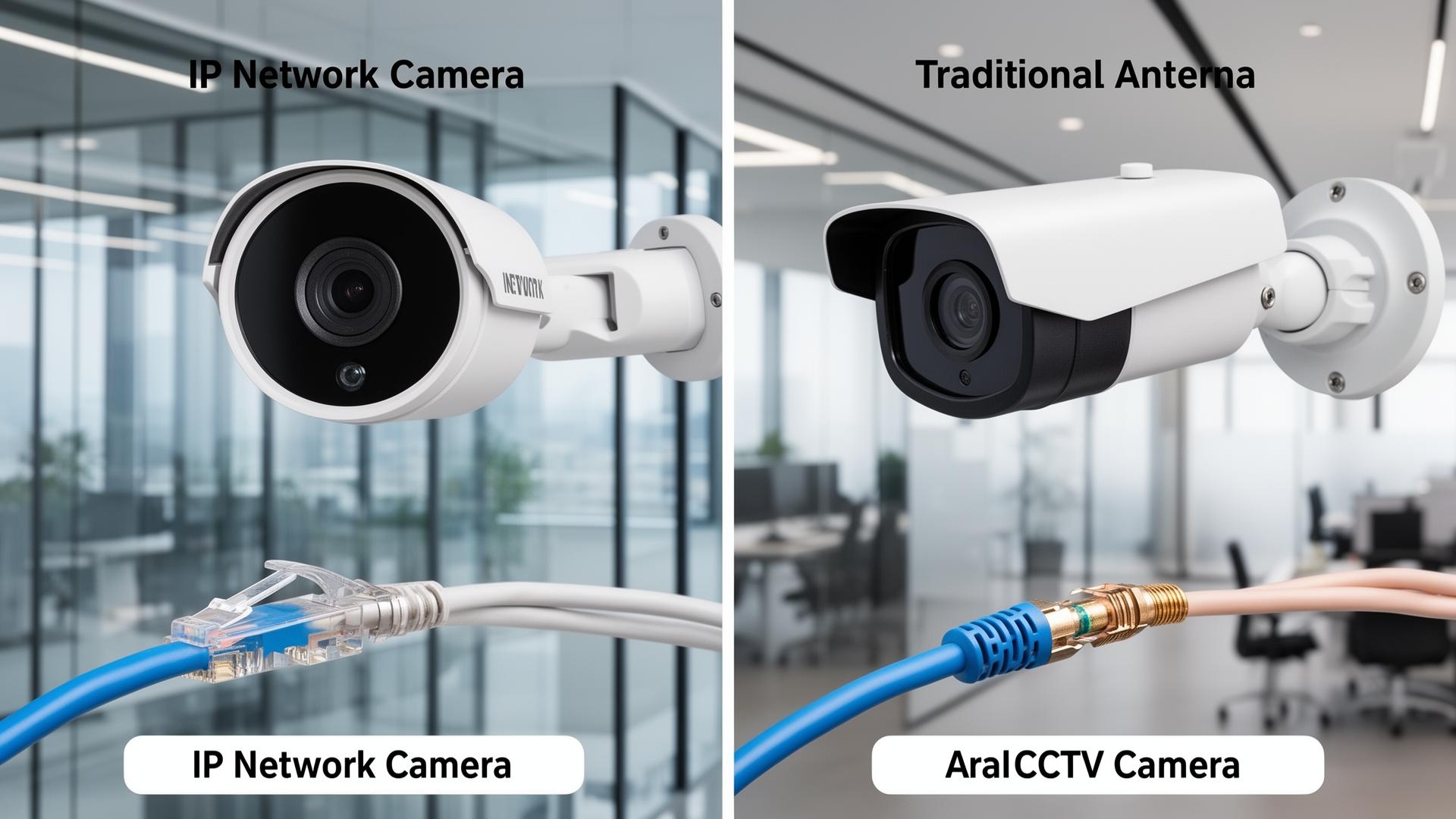
IP Cameras vs CCTV Cameras: Which Is Best for Your Business?
When businesses install a security system, one of the first questions they face is: should we install IP cameras or traditional CCTV cameras?
Both systems provide video surveillance, but they operate very differently. Understanding the differences helps businesses choose the best security camera system for their environment.
In this guide we explain what IP cameras are, what traditional CCTV cameras are, the key differences between the two technologies, and which system is best for business security. For a broader overview, see our complete guide to CCTV systems for businesses.
What Are Traditional CCTV Cameras?
Traditional CCTV cameras are analog security cameras connected to a DVR (Digital Video Recorder). These systems have been used for decades in surveillance systems.
How CCTV Cameras Work
- Analog cameras capture video footage
- The footage travels through coaxial cables
- The signal is processed by a DVR recorder
- Video is stored on hard drives
Because the recorder processes the video, the cameras themselves are relatively simple devices.
What Are IP Cameras?
IP cameras are network-based security cameras. Instead of sending analog signals through coaxial cables, they transmit digital video across a computer network.
IP cameras connect using Ethernet cables (Cat5e or Cat6) and typically work with an NVR (Network Video Recorder).
How IP Cameras Work
- The camera captures video
- The video is processed by the camera itself
- The footage is transmitted over the network
- The NVR stores the recorded video
Because the camera performs much of the processing, IP cameras can support advanced features and higher resolution video.
Key Differences Between IP Cameras and CCTV Cameras
Understanding the main differences helps businesses choose the right system.
| Feature | CCTV Cameras | IP Cameras |
|---|---|---|
| Camera Type | Analog | Digital |
| Recording System | DVR | NVR |
| Cable Type | Coaxial | Ethernet |
| Power | Separate power cable | Often PoE |
| Video Quality | Standard HD | HD to 4K |
| Scalability | Limited | Highly scalable |
Installation Differences
One of the biggest differences between the two systems is how they are installed.
CCTV (DVR) Installation
DVR systems require coaxial cables, power cables for each camera, and direct connection to the recorder. Because video and power travel through separate cables, installations may require two cables per camera. This can increase installation complexity in larger buildings.
IP Camera (NVR) Installation
IP camera systems use Ethernet cables. Most installations use Power over Ethernet (PoE). PoE allows one cable to carry both video data and power to the camera. This makes installation much simpler and cleaner.
IP cameras only need to connect to the network, which also makes the system easier to expand. For detailed installation guidance, see our CCTV installation guide.
Video Quality Comparison
One of the biggest advantages of IP cameras is image quality.
Traditional CCTV cameras typically support 720p or 1080p resolution. Modern IP cameras can support 4MP, 8MP, or 4K resolution.
Higher resolution improves the ability to identify people, read license plates, and capture clear footage.
Remote Monitoring Capabilities
Modern businesses often require remote access to their cameras. Both systems can support remote viewing, but IP cameras provide more flexibility.
With IP systems, users can view cameras from smartphones, laptops, tablets, and control room monitors. This makes IP systems ideal for businesses with multiple locations. Learn more in our remote CCTV monitoring guide.
Scalability for Growing Businesses
CCTV System Expansion
DVR systems are limited by the number of ports on the recorder. Adding cameras may require replacing the recorder.
IP Camera Expansion
IP cameras connect to the network. This makes it easy to add additional cameras by connecting them to the network switch. This flexibility is why most modern commercial installations use IP camera systems.
Smart Features Available with IP Cameras
IP cameras offer several advanced capabilities, including:
- Motion detection
- Intrusion alerts
- Facial recognition
- License plate recognition
- Video analytics
These features help businesses improve security monitoring.
Hikvision IP Camera Systems
Hikvision produces a wide range of professional IP surveillance systems. Their cameras are widely used in offices, warehouses, factories, logistics facilities, and retail environments.
Hikvision systems support advanced features including smart analytics, motion detection, night vision, and high-resolution video. These systems integrate easily with modern NVR recording platforms.
Dahua IP Surveillance Systems
Dahua is another global leader in surveillance technology. Dahua IP camera systems are known for excellent image quality, reliable hardware, and scalable security infrastructure. Dahua cameras are commonly used in commercial environments where reliability is essential.
Which System Is Best for Businesses?
While both technologies can work for surveillance, most modern commercial installations prefer IP camera systems.
Why Businesses Prefer IP Cameras
- Higher resolution video
- Easier installation
- Network scalability
- Advanced security features
For this reason, many new business CCTV installations use IP cameras with NVR recording systems. Compare camera options in our best CCTV camera systems guide.
When DVR Systems Still Make Sense
DVR systems are still useful for upgrading existing analog systems, smaller installations, and budget-sensitive environments. However, businesses installing new surveillance systems typically choose IP-based solutions.
Choosing the Right CCTV System for Your Business
Every business environment is different. Factors to consider include building size, network infrastructure, security requirements, number of cameras, and remote monitoring needs.
Working with a professional installer helps businesses design the right system. Managed IT services can provide ongoing support for integrated security systems.
Speak to a SureTel CCTV Specialist
SureTel provides professional CCTV systems designed for modern businesses. We supply and install Hikvision and Dahua IP surveillance systems for offices, warehouses, factories, retail stores, and commercial facilities.
Our solutions include:
- CCTV system design
- Professional installation
- Remote monitoring systems
- Network infrastructure integration
If you want to improve security and visibility across your business operations, our specialists can help. Speak to a SureTel CCTV specialist today.