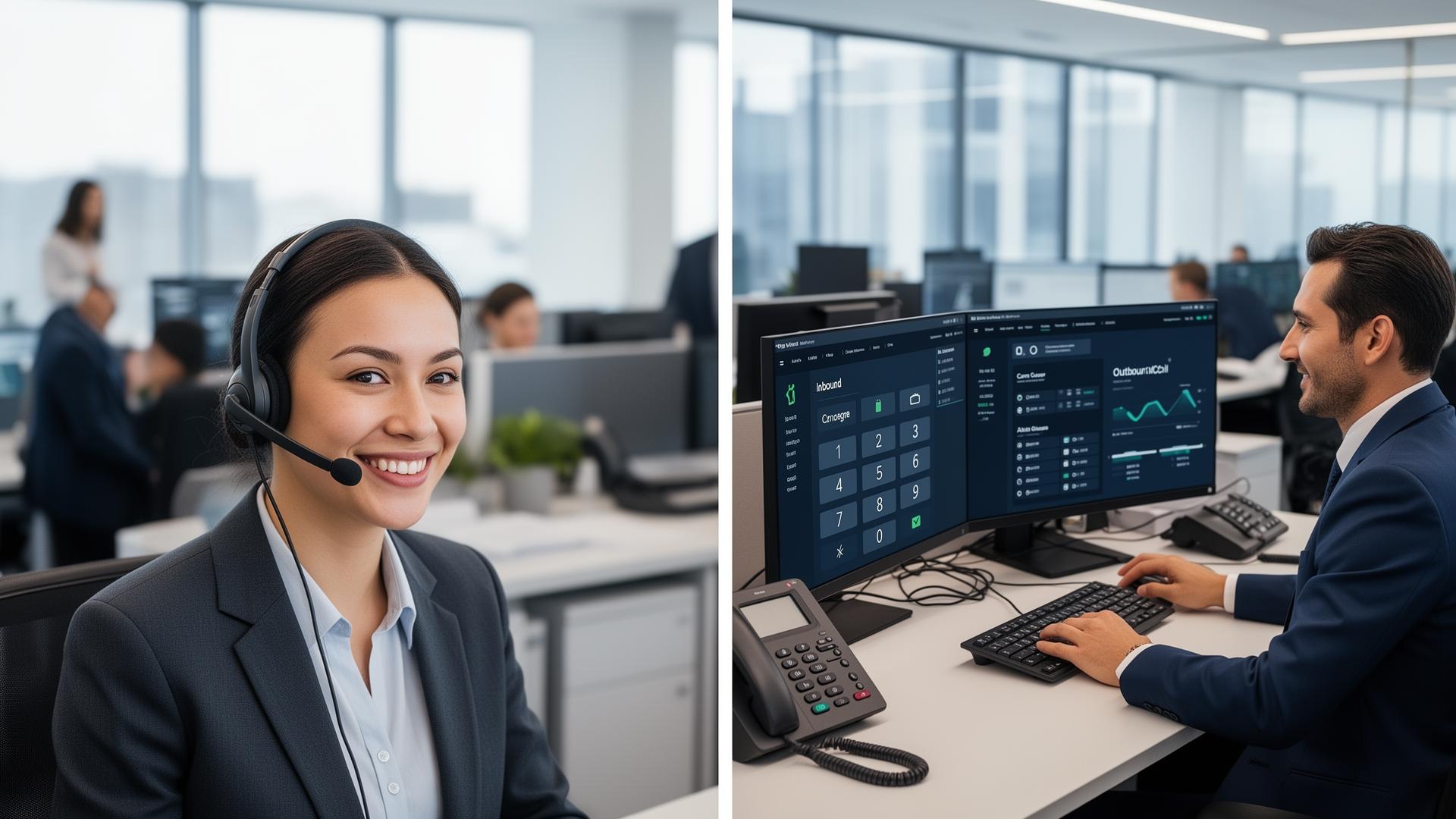
Call centers are a critical part of modern business communication. They allow organisations to manage customer interactions efficiently, handle support requests, generate sales, and build stronger relationships with their customers.
However, not all call centers operate the same way. Most fall into two primary categories: inbound call centers and outbound call centers.
Understanding the difference between these two models is essential when designing a call center strategy or implementing call center technology.
In this guide, we explain the key differences between inbound and outbound call centers, how each works, and which model is best suited for different types of businesses.
What Is an Inbound Call Center?
An inbound call center handles incoming calls from customers. Customers typically contact inbound call centers for assistance, information, or support.
Common inbound call center functions include:
- Customer service
- Technical support
- Order processing
- Account management
- Appointment scheduling
Inbound call centers focus heavily on customer experience and efficient call handling. Calls are usually routed to the appropriate department or agent based on predefined rules.
How Inbound Call Centers Work
Inbound call centers rely on automated systems that manage incoming calls and direct them to available agents. Key technologies used include:
- Automatic call distribution (ACD)
- Interactive voice response (IVR) systems
- Call queue management
- Call routing rules
- Customer relationship management integrations
These tools ensure that customers reach the right department quickly while minimising wait times.
What Is an Outbound Call Center?
Outbound call centers make calls to customers rather than receiving them. Agents initiate calls for various business purposes.
Common outbound call center activities include:
- Sales campaigns
- Lead generation
- Market research
- Appointment setting
- Debt collection
- Customer follow-ups
Outbound call centers often rely on automated dialing technology to maximise agent productivity.
Learn more in our guide: Predictive Dialers Explained
How Outbound Call Centers Work
Outbound call centers use software platforms that automatically dial contacts from a database. When a customer answers the call, the system connects them to an available agent.
This automation dramatically increases productivity compared to manual dialing. Outbound call centers often use:
- Predictive dialers
- Power dialers
- Campaign management tools
- Lead management systems
These tools allow businesses to contact large numbers of customers efficiently.
Key Differences Between Inbound and Outbound Call Centers
Although both types of call centers rely on similar technology, their operational focus differs:
| Feature | Inbound Call Center | Outbound Call Center |
|---|---|---|
| Primary function | Receive customer calls | Make calls to customers |
| Typical goals | Customer support | Sales or outreach |
| Technology focus | Call routing | Dialing automation |
| Agent workload | Respond to requests | Initiate contact |
Some organisations operate both types of call centers within the same platform. These are known as blended call centers.
What Is a Blended Call Center?
A blended call center handles both inbound and outbound calls using the same team and technology platform.
Agents may handle inbound support calls and then switch to outbound campaigns when call volumes are low. This model allows organisations to maximise agent productivity while maintaining high customer service standards.
Technology Required for Inbound and Outbound Call Centers
Regardless of the operational model, modern call centers rely on several core technologies, including:
- Call center software platforms
- VoIP communication systems
- Reliable internet connectivity
- Call recording systems
- CRM integrations
These technologies work together to ensure efficient communication and operational visibility.
Learn more about call center software platforms.
The Role of Call Center Software
Call center software manages all aspects of call center operations. Key features typically include:
- Call routing
- Dialing automation
- Agent management
- Real-time monitoring
- Reporting and analytics
One of the most widely used call center platforms globally is VICIdial, which supports both inbound and outbound operations.
Importance of VoIP in Call Centers
Modern call centers use VoIP (Voice over Internet Protocol) technology to handle calls over the internet rather than traditional phone lines. VoIP provides several advantages:
- Lower call costs
- Flexible call routing
- Integration with software platforms
- Global connectivity
Reliable VoIP infrastructure is essential for maintaining clear call quality and stable connections.
Learn more about VoIP for call centers.
Connectivity Requirements for Call Centers
Because call centers rely on internet-based communication, reliable connectivity is critical. Poor connectivity can cause:
- Dropped calls
- Audio delays
- Call quality issues
- System instability
Many call centers use business fibre connectivity to ensure stable performance and low latency.
Explore our business connectivity solutions.
Common Challenges in Call Center Operations
Managing High Call Volumes
Inbound support teams must handle fluctuating call volumes while maintaining customer satisfaction.
Agent Productivity
Outbound campaigns require tools that allow agents to contact large numbers of prospects efficiently.
System Reliability
Call center infrastructure must remain stable even during peak call periods.
Integration Complexity
Integrating call center platforms with CRM systems and other business tools can be technically complex.
Why Many Businesses Choose Hosted Call Center Platforms
Managing call center infrastructure internally can be challenging. Because of this, many organisations choose hosted call center platforms that provide fully managed infrastructure.
Hosted solutions typically include:
- Preconfigured call center software
- Optimised VoIP routing
- System monitoring
- Technical support
This allows businesses to focus on operations while experts manage the underlying technology.
Learn more: Hosted VICIdial vs Self-Hosted
How SureTel Supports Call Center Operations
SureTel provides integrated communication and infrastructure solutions designed for call center environments. Our services include:
- Hosted VICIdial platforms
- Business VoIP communication systems
- Reliable fibre connectivity
- Cloud PBX platforms
- Managed IT infrastructure
By combining these services, businesses can operate reliable and scalable call centers supported by experienced engineers.
Read our complete guide: Complete Guide to Starting a Call Centre in South Africa
Final Thoughts
Inbound and outbound call centers serve different purposes, but both rely on reliable technology and efficient operational processes.
Inbound call centers focus on delivering excellent customer support, while outbound call centers focus on reaching customers proactively.
Many organisations combine both approaches within a blended call center environment supported by modern call center platforms.
With the right technology foundation, businesses can operate efficient call centers that improve customer experience while driving revenue growth.
Speak to a Call Center Specialist
If you are planning to build or upgrade a call center, the SureTel team can help. We provide:
- Hosted call center platforms
- VoIP communication solutions
- Business fibre connectivity
- Managed infrastructure
Speak to a SureTel specialist today to discuss your call center requirements.