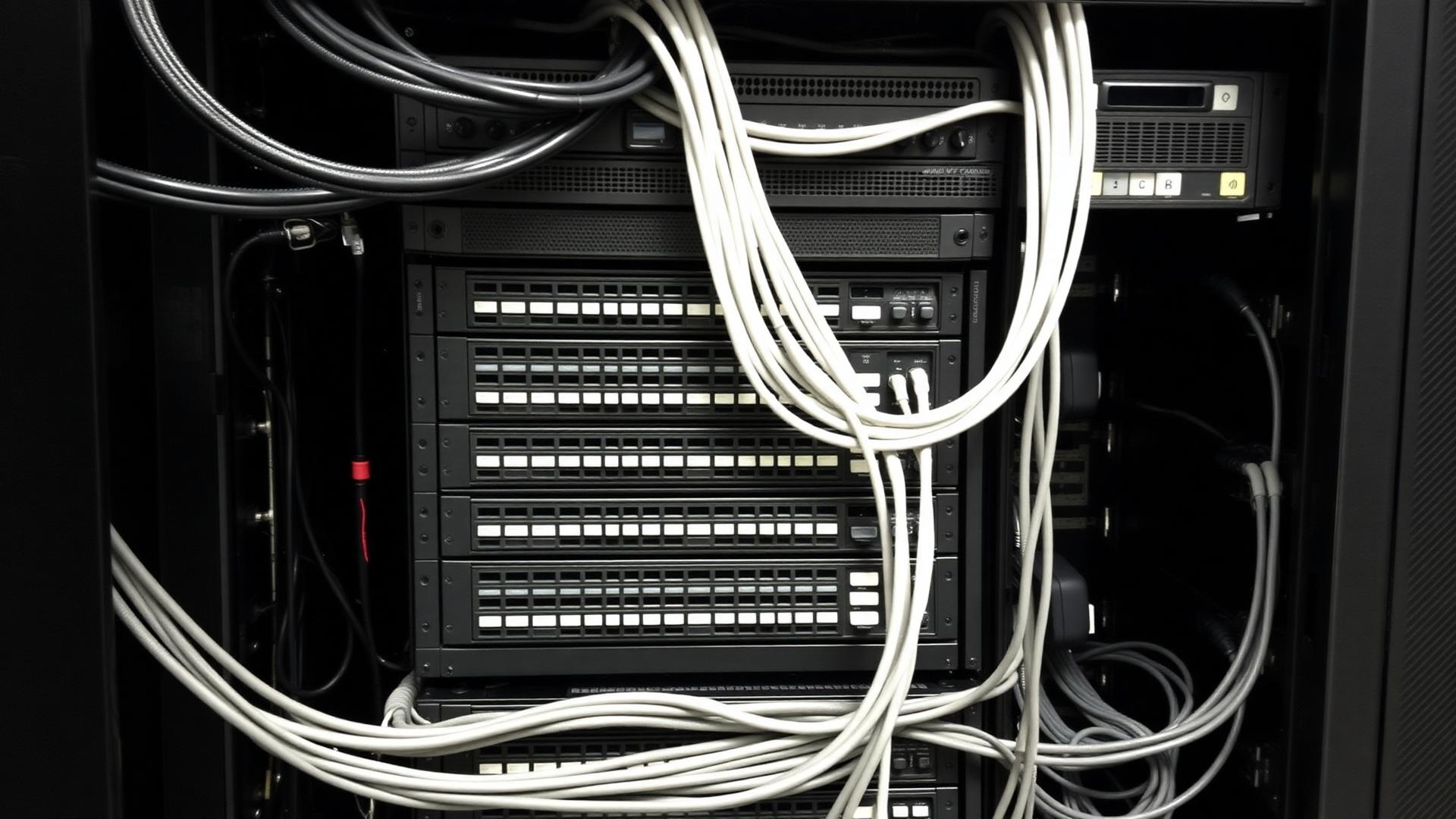
Hybrid PBX Systems: Combining Onsite Hardware with Cloud Flexibility
A hybrid PBX is an onsite PBX system that blends local hardware reliability with cloud-powered features. The core IP PBX sits on your premises — handling internal calls, local routing, and call recording even during internet outages — while cloud services extend your office phone system with remote extensions, mobile apps, video conferencing, and automatic failover. It's the ideal solution for businesses that want onsite control without sacrificing modern flexibility. Explore onsite PABX systems from SureTel.
This guide was prepared by the SureTel Network Engineering Team, which has deployed hundreds of onsite PBX and hybrid systems across South Africa — from professional services firms requiring call recording compliance to manufacturing plants needing bulletproof internal communications.
Last Updated: March 2026
Why Not Every Business Is Ready for 100% Cloud
Cloud PBX has dominated the conversation around modern business phone systems — and for good reason. It's flexible, subscription-based, and requires no on-premise equipment. But the reality for many South African businesses is more nuanced.
Not every business is ready to entrust 100% of its voice communications to an internet connection. Consider these scenarios:
- Inconsistent internet: Areas outside major metros may experience fibre outages, load shedding-related connectivity drops, or microwave link instability
- Compliance requirements: Industries like healthcare, legal, and financial services may require call recordings stored on-premise rather than in a third-party cloud
- Existing investment: Businesses that recently invested in IP PBX hardware don't want to write off that investment to move to cloud
- Call volume density: Offices with 50+ extensions making mostly internal calls benefit from local call processing that doesn't depend on internet bandwidth
- Control preference: Some IT managers and business owners simply prefer having physical equipment they can see, touch, and manage directly
For these businesses, a hybrid PBX offers the perfect middle ground — onsite reliability with cloud-powered flexibility.
What Is a Hybrid PBX System?
A hybrid PBX is an office phone system that operates primarily on-premise but extends selected features and services to the cloud. The physical IP PBX appliance sits in your server room or comms cabinet, handling:
- Internal extension-to-extension calls
- Local call routing and IVR menus
- Call recording and voicemail storage
- Ring groups, call queues, and hunt groups
- Integration with local door phones, paging systems, and analogue devices
Simultaneously, cloud services extend the system with:
- Remote and mobile extensions for staff working from home or travelling
- Smartphone and desktop softphone apps
- Video conferencing and team messaging
- Automatic failover — if the onsite system goes down, calls reroute to cloud extensions or mobile numbers
- Centralised management for multi-site deployments
The result is an onsite PBX that doesn't feel like a legacy system. It delivers the modern features users expect while maintaining the rock-solid reliability of local hardware.
How a Hybrid PBX Works
The architecture of a hybrid system is straightforward:
- On-premise IP PBX (e.g., Yeastar P-Series or 3CX on a local server) handles all core telephony
- SIP trunks connect the PBX to the PSTN via your business internet connection — replacing traditional phone lines
- Cloud bridge — the PBX manufacturer's cloud platform links remote users, mobile apps, and failover services to the onsite system
- IP desk phones on the local network connect directly to the PBX via Ethernet (PoE powered)
- Remote users connect via softphone apps that tunnel through the cloud bridge to the onsite PBX
Internal calls between desk phones never leave the building — they're processed entirely by the local IP PBX with zero internet dependency. External calls route via SIP trunks over your internet connection. Remote users connect through the cloud layer, which acts as a secure relay.
Hybrid vs. Cloud vs. Traditional Onsite PBX
Understanding where hybrid PBX fits requires comparing it to the alternatives:
| Feature | Traditional Onsite PBX | Hybrid PBX | Cloud PBX |
|---|---|---|---|
| Hardware Location | On-premise | On-premise + cloud services | Provider's data centre |
| Internet Dependency | None (ISDN lines) | Partial (internal calls work offline) | Total (all calls need internet) |
| Remote Workers | Not supported natively | Full support via cloud bridge | Full support |
| Mobile App | No | Yes | Yes |
| Call Recording Storage | Local | Local (with cloud backup option) | Cloud only |
| Upfront Cost | High | Medium | Low |
| Monthly Cost | Low (maintenance only) | Low–Medium | Higher (per-user subscription) |
| Scalability | Limited by hardware | Flexible (add cloud extensions) | Unlimited |
| Failover | None | Automatic cloud failover | Provider-managed redundancy |
| Control | Full local control | Full local + cloud management | Provider-managed |
The hybrid PBX occupies the sweet spot: it retains the reliability and control of onsite hardware while adding the flexibility that modern workforces demand. For a detailed comparison of onsite vendor options, see our Yeastar vs. 3CX comparison.
The Reliability Advantage
This is the core reason businesses choose hybrid over pure cloud: onsite reliability.
Internal Calls Never Depend on Internet
In a hybrid system, a call from extension 201 to extension 315 is processed entirely by the local IP PBX. It travels over your internal Ethernet network — not the internet. If your ISP goes down, your fibre gets cut, or load shedding takes out your router, internal calls keep working as long as the PBX and PoE switch have UPS power.
Local PSTN Failover
Many hybrid IP PBX systems support analog trunk ports (FXO) as a backup. If SIP trunks fail, the system automatically routes critical outbound calls via a traditional analog line — ensuring your business can always make emergency calls.
On-Premise Call Recording
Call recordings are stored on the local PBX's hard drive or a network-attached storage device. There's no dependency on cloud storage availability, no data sovereignty concerns, and no risk of a cloud provider discontinuing their service and taking your recordings with them.
Load Shedding Resilience
A properly designed hybrid system with UPS protection on the PBX, PoE switch, and fibre ONT can maintain full telephony during Stage 4–6 load shedding. The entire voice infrastructure draws less than 200W for a typical 30-extension deployment — easily sustained by a mid-range UPS for 2–4 hours.
Cloud Features You Gain
A hybrid PBX isn't just an onsite PBX with a cloud label. The cloud component adds genuinely transformative capabilities:
- Work-from-anywhere extensions: Staff use a softphone app on their laptop or smartphone that behaves exactly like their desk phone — same extension number, same call features, same directory
- Video conferencing: Built-in video meetings without third-party subscriptions (Yeastar Linkus and 3CX both include this)
- Team messaging: Internal chat, file sharing, and presence indicators integrated into the phone system
- Web-based management: Configure the PBX from anywhere via a web portal — no need to VPN into the office network
- Automatic updates: Firmware and security patches can be pushed from the cloud, keeping the system current without on-site visits
- Multi-site linking: Connect multiple office locations under a single phone system with unified dialling plans and inter-site calling
Who Should Choose a Hybrid PBX?
A hybrid PBX is the right choice for businesses that match one or more of these profiles:
- Professional services firms (law, accounting, consulting) that need reliable local calling plus mobile access for partners
- Medical practices that require on-premise call recording for POPIA compliance and can't risk call drops during patient interactions
- Manufacturing and logistics operations where internal paging, warehouse intercoms, and factory floor phones must work regardless of internet status
- Multi-branch businesses that want centralised management but local resilience at each site
- Businesses in areas with unreliable internet that can't depend on 100% cloud connectivity
- Companies with existing PBX hardware that want cloud features without a full rip-and-replace
Vendor Options: Yeastar vs. 3CX for Hybrid
SureTel deploys two leading IP PBX platforms for hybrid deployments, each suited to different business needs:
| Capability | Yeastar P-Series | 3CX |
|---|---|---|
| Best For | SMEs, professional firms, unified comms | Call centres, sales teams, high-volume |
| Deployment | Purpose-built hardware appliance | Software on dedicated server or VM |
| Mobile App | Linkus UC (iOS/Android/Desktop) | 3CX App (iOS/Android/Desktop/Web) |
| Video Conferencing | Built-in (Linkus) | Built-in (browser-based) |
| CRM Integration | HubSpot, Salesforce, Zoho, Microsoft | HubSpot, Salesforce, Freshdesk, Microsoft |
| Call Centre Features | Basic queues and wallboards | Advanced queues, wallboards, skills-based routing |
| Cloud Bridge | Yeastar Central Management (YCM) | 3CX cloud relay / SBC tunnel |
| Max Extensions | Up to 500 (P-Series P570) | Unlimited (server dependent) |
Both platforms support full hybrid operation with cloud failover, remote extensions, and mobile apps. For a detailed feature comparison, visit our Yeastar vs. 3CX comparison page.
Cost Analysis: Hybrid vs. Pure Cloud
The financial case for hybrid PBX depends on your time horizon and scale:
| Cost Factor | Hybrid PBX (50 users) | Cloud PBX (50 users) |
|---|---|---|
| Hardware / Setup | R35,000–R60,000 (once-off) | R0–R5,000 |
| Monthly Licensing | R500–R1,500 | R5,000–R10,000 |
| SIP Trunking | R1,500–R3,000/month | Included in subscription |
| Year 1 Total | R59,000–R114,000 | R60,000–R125,000 |
| Year 3 Total | R83,000–R168,000 | R180,000–R365,000 |
| Year 5 Total | R107,000–R222,000 | R300,000–R605,000 |
For businesses planning to stay in their premises for 3+ years, hybrid PBX delivers significantly lower total cost of ownership — particularly at scale. The break-even point typically occurs around 12–18 months.
The Migration Path: Hybrid as a Stepping Stone
One of the smartest aspects of a hybrid PBX strategy is that it doesn't lock you in. It's a natural stepping stone toward full cloud — if and when your business is ready:
- Phase 1: Deploy onsite IP PBX with SIP trunks, replacing ISDN lines and reducing costs immediately
- Phase 2: Enable cloud bridge for remote workers and mobile apps — extending the system without adding hardware
- Phase 3: Gradually move extensions to cloud PBX as leases expire or the business model evolves
- Phase 4: Full cloud migration when onsite hardware reaches end-of-life (typically 7–10 years)
This phased approach eliminates the risk of a "big bang" migration and lets you test cloud features with a subset of users before committing fully.
Network & Infrastructure Requirements
A hybrid PBX deployment requires proper network infrastructure:
- PoE switch: Powers IP desk phones over Ethernet — no separate power adapters needed. Budget 15–30W per phone
- Structured cabling: Cat6 Ethernet to every desk. This carries both data and voice on the same cable
- Business fibre: Minimum 20 Mbps symmetrical for SIP trunking and cloud bridge connectivity. Business internet solutions with QoS are recommended
- UPS protection: Cover the PBX, PoE switch, and fibre ONT for 2–4 hours of load shedding resilience
- VLAN segmentation: Separate voice and data traffic on your network for optimal call quality
- Firewall: SIP-aware firewall with proper NAT traversal configuration
SureTel handles all of this as part of our turnkey onsite PABX systems deployment — from network assessment to cabling, PBX installation, and ongoing support.
SureTel Hybrid PBX Solutions
SureTel provides end-to-end hybrid PBX solutions using Yeastar and 3CX platforms, tailored to your business requirements:
- Site assessment to determine the optimal balance of onsite and cloud features
- Hardware supply and installation — PBX appliances, IP phones, PoE switches, and structured cabling
- SIP trunk provisioning with free number porting from your existing provider
- Cloud bridge configuration for remote workers, mobile apps, and failover
- Training for administrators and end-users
- Ongoing support with 24/7 technical assistance and proactive monitoring
Whether you're replacing an aging PABX, upgrading from ISDN, or designing a phone system for a new office, SureTel's onsite PABX systems team will design a hybrid solution that delivers onsite reliability with cloud-powered flexibility.
Not sure if hybrid or cloud is right for your business? Request a free PBX assessment and let our engineers recommend the best approach for your specific requirements.